





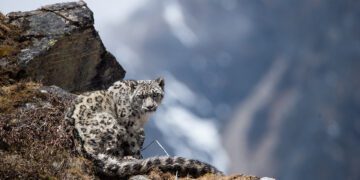
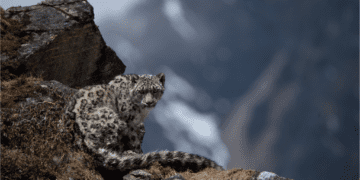





















KATHMANDU, April 22 — Nepal has announced its first national estimate of the snow leopard population, marking a historic achievement in the country’s conservation efforts for this elusive and iconic Himalayan species.
Led by the Department of National Parks and Wildlife Conservation (DNPWC) and the Department of Forests and Soil Conservation (DoFSC), the nationwide assessment estimates a total of 397 snow leopards across Nepal. Based on data from seven study regions, the estimated mean density stands at 1.56 individuals per 100 square kilometers.
Dr. Ramchandra Kandel, Director General of DNPWC, hailed the estimate as a landmark moment. “This assessment gives us a clearer picture of the snow leopard’s status and helps shape future conservation strategies,” he said, reaffirming Nepal’s commitment to working with local communities and global partners for the long-term protection of the species.

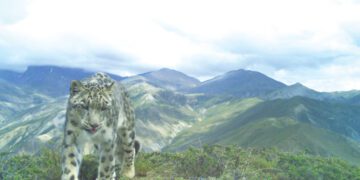
The data, collected between 2015 and 2024, used advanced scientific tools, including camera trapping and genetic analysis of scat samples. The assessment followed international guidelines under the Global Snow Leopard and Ecosystem Protection Program (GSLEP), particularly the PAWS (Population Assessment of the World’s Snow Leopards) protocol. WWF Nepal and other research organizations contributed to the process.
Badri Raj Dhungana, Director General of DoFSC, pointed out the challenges of protecting snow leopards outside protected areas. “A large portion of Nepal’s snow leopard habitat lies beyond national parks and reserves,” he noted, calling for targeted strategies to conserve these landscapes. He emphasized the importance of community-led conservation, habitat connectivity, and mitigating human-wildlife conflict.
Dr. Ghana Shyam Gurung, Country Representative of WWF Nepal, called the assessment a pioneering step in Nepal’s conservation history. “WWF is proud to support this baseline study,” he said. “This data will guide us to prioritize conservation efforts where they’re needed most.” He also underlined that collaboration among government bodies, conservation partners, and local communities has been vital, especially in the face of threats like climate change and infrastructure development.
The report highlights major priorities for conservation, including:
- Stronger protection of snow leopard habitats
- Increased community engagement
- Conflict mitigation with local populations
- Management of habitats outside protected areas
Snow leopards are native to 12 countries across Asia but remain one of the least-studied big cats. A 2021 WWF report noted that only 23% of their global range has been systematically studied, with population data available for just 3% of their habitat.
Nepal’s estimate joins other national efforts in Mongolia, Bhutan, and India, offering a broader understanding of snow leopard distribution and contributing to the global mission of protecting the species and its fragile high-mountain ecosystems.
This milestone underscores Nepal’s leadership in snow leopard conservation and highlights the urgent need for continued research, local stewardship, and transboundary cooperation to secure the future of this majestic species.














Discussion about this post