






















The Cycle of Drought, Groundwater Crisis, and Cholera Epidemic
- Suresh Bidari, Raju Jhallu Prasad, Ritesh Panthee
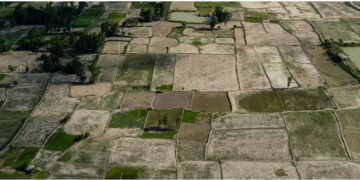
Birgunj- It is currently monsoon season. At this time, Madhesh Province of Nepal should have been in the news because of floods. But this year a different scene appeared. For a long time, there was no rainfall, and during the rice planting season, cracks in the fields broke the hearts of farmers.
Madhesh Province, which depends on rice production, rivers, and water resources, not only ensures food security for millions of people but also makes a significant contribution to the national economy. However, in recent decades, abnormal changes in weather cycles, rainfall patterns, and water resource systems have been making Madhesh one of the most climate-vulnerable regions.
This year, after a crisis emerged due to drought, the Madhesh government declared the province a drought-affected area on July 10. According to the Disaster Risk Reduction and Management Act 2017, the federal government declares a crisis-hit area upon the recommendation of the provincial government. On July 21, the Madhesh government recommended to the federal government to declare the region crisis-hit. On July 23, the Cabinet meeting declared all eight districts of Madhesh Province crisis-hit for three months.
After the declaration, the provincial government sent water tankers to places facing severe drinking water shortages, especially Birgunj. The federal government announced that it would install 500 deep boreholes. Before that was implemented, farmers somehow managed to plant rice late, making use of the delayed rainfall.
According to the Department of Agriculture, by July 26, only 52 percent of the 580,000 hectares of farmland in Madhesh Province had been planted with rice. In the same period last year, the figure was 92 percent, marking a huge decline. This more than 40 percent drop has never been seen before, according to a study by ICIMOD.
Madhesh is the country’s food basket, so the Madhesh government has adopted the policy of “feeding the nation.” In its policy and program for the fiscal year 2025/26, it has allocated budget for two rice promotion programs in order to materialize the “Feed the Nation” campaign and to increase rice production and productivity.
The government’s policy is to increase agricultural production and productivity. For that, it has planned to support the development and expansion of irrigated areas, to promote irrigation management, and to expand underground irrigation systems. For agricultural electrification, it has allocated 260 million rupees.
However, the rapid assessment report by the International Centre for Integrated Mountain Development (ICIMOD) describes the situation as a combination of meteorological drought (less rainfall than normal) and hydrological drought (drying up of rivers, lakes, and groundwater). Together, these have caused agricultural drought, where crops do not get enough water, leading to poor harvests and economic stress for farmers.
The report states: “This year, unusually low rainfall even during the mid-monsoon has severely disrupted the rice planting calendar, which is the most time-sensitive and critical phase of the rice production cycle. This delay is not only an agricultural concern; it signals the early stages of a potential large-scale food security crisis with national implications.”

Rice cultivation in Madhesh mainly depends on rainfall. With the repeated failure of the monsoon, the lack of groundwater, and limited and fragmented irrigation infrastructure in the province, local farmers have faced great difficulty in rice production. The effective time for planting rice is usually between mid-June and mid-July. But due to the lack of water this year, farmers could not prepare their fields in that period. The drought has altered the crop calendar itself. As a result, ICIMOD estimates that productivity will continue to decline, leading to an impending food security crisis.
According to the report, delays in rice planting have affected around 350,000 hectares of farmland, which normally produces about 12.8 million metric tons of rice annually. In Madhesh Province alone, it is estimated that rice production will decrease by 400,000 to 450,000 metric tons. These figures show the direct impact of climate change on food security.
The same report points out that this year’s situation is likely to cause inflation in food prices due to reduced availability of rice in the domestic market. This will disproportionately affect low-income and vulnerable households. Smallholder farmers are already facing serious income losses, and many may be forced to leave their homes and farms or migrate in search of alternative livelihoods. Likewise, disruptions in seasonal labor patterns and rural employment opportunities will deepen socio-economic stress in the region. With reduced domestic rice production, rice imports are expected to rise. This will not only affect the national trade balance but also put pressure on the public food distribution system.
The Department of Hydrology and Meteorology (DHM), after analyzing climate data from 1971 to 2014, reported that Madhesh has experienced rising temperatures and a decline in average annual rainfall. Nepal’s average temperature has been increasing by 0.056 degrees Celsius each year. The rate of temperature rise has been even higher in the Tarai region. According to the report, over the past 40 years, the average temperature in Madhesh has increased by 1.4 degrees Celsius (2.5 degrees Fahrenheit) and the average annual rainfall has decreased by 72 millimeters (2.8 inches).

As temperatures rise and average annual rainfall decreases, Nepal’s rainfall pattern has become highly irregular. The traditional monsoon, which used to bring 80 to 85 percent of annual rainfall, has now shifted into a cycle where heavy rains fall in a short period followed by prolonged dry spells. This has destabilized the country’s agricultural system.
In the Tarai, which stretches across 36 districts over an 800-kilometer area below the Chure hills, people rely mainly on groundwater for drinking water and irrigation.
A study of ‘Groundwater Scarcity in the Tarai‘ has shown a significant decline in groundwater levels from 2022 to the present. Rainfall in the Chure region in 2025 was 22 percent below normal, which has severely affected the ecosystem of the Tarai. With the rapid decline in groundwater levels, about 90 percent of tube wells in some areas have already dried up. The study also notes that rapid urbanization and agricultural expansion have led to groundwater pumping at an unsustainable rate.
The same study warns that by 2030 groundwater levels in the Tarai will drop by 2 to 3 meters, most districts will face drinking water shortages during the summer, agricultural drought will increase by 20 percent, and people may be forced to migrate from the Tarai in search of water.
Similarity with Bihar
Nepal’s National Adaptation Plan on Climate Change (NAP 2021–2050) identifies Madhesh as a high-risk region. It highlights irregular rainfall, prolonged droughts, over-extraction of groundwater, and the spread of waterborne diseases as direct climate-related challenges.
Groundwater has become the primary source of irrigation in Madhesh. But with increasingly erratic rainfall and more frequent droughts, farmers have been using groundwater excessively. As a result, groundwater levels have continued to fall. The weak recharge system in Madhesh, combined with over-extraction, poses a risk of long-term water scarcity.
Nepal’s border state of Bihar is facing a similar crisis. The State Action Plan on Climate Change (SAPCC 2015–2020) of the Bihar government identified recurring droughts, irregular rainfall, and rising dependence on groundwater as major challenges. This shows that the problem has become a shared crisis affecting both societies across the border.

The SAPCC has identified the northern districts of Bihar as being at high risk from floods and extreme monsoon events caused by Himalayan rivers. The report has also highlighted groundwater stress, recurring droughts, heat waves, and the health impacts of waterborne diseases.
According to India’s Central Ground Water Board (CGWB, 2022), groundwater levels in Bihar have been falling at an annual rate of 0.3 to 0.5 meters. The main reasons are irregular rainfall driven by climate change and agricultural over-extraction. This has created a similar drinking water and irrigation crisis in both Nepal and India.
The Bihar Economic Survey (2022–2023) reported that in the past two years (during the pre-monsoon period), groundwater levels have declined mainly in districts such as Aurangabad, Saran, Siwan, Gopalganj, East Champaran, and Supaul.
Rajeev Sinha, Surya Gupta, and Santosh Nepal have conducted a study on groundwater dynamics in the plains of northern Bihar. They analyzed the spatial and temporal patterns of groundwater depletion in this region based on both groundwater levels and storage. This area is generally considered less exploited in terms of organized groundwater development. However, their analysis shows significant depletion of groundwater resources over the past decade, and they conclude that current groundwater use is unorganized and unstable.
The study identifies rapid population growth and changes in land use and cover—mostly the conversion of agricultural land—as the main drivers of increased water demand. Because groundwater is relatively easily accessible, most of this demand has likely been met through groundwater extraction. They predict that in the coming years, increasing urbanization, further land use and cover changes, and potential damage to recharge zones will make the problem even more severe.
To prevent this region from becoming another groundwater crisis area, the researchers emphasize the urgent need for sustainable groundwater management plans. Such plans should include precise groundwater-level mapping in highly heterogeneous areas, integration of all available data (groundwater levels, agricultural practices, land use), and the development of rules and regulations for groundwater use.
Data from the Indian Meteorological Department (IMD) confirms a temperature increase of 0.2–0.3 degrees Celsius per decade and irregular rainfall patterns.
Because there are no major rivers flowing from the Himalayas in this region, Birgunj and surrounding border areas depend heavily on rainfall for groundwater recharge. Experts note that changes in the monsoon in recent years have already affected groundwater levels.
Hydrologist Madhukar Upadhyay points out that pressure on groundwater has increased in both Madhesh and Bihar. According to him, as demand rises and natural recharge decreases, groundwater stress is intensifying in densely populated areas. In Bihar, farmers are allowed to install bore wells at subsidized rates and the government even pays their electricity bills, which has led to excessive groundwater use.
He explains that pumping water with large pumps from deep wells negatively impacts groundwater levels. Although hand pumps are present in most homes, bore wells are installed in households that can afford them, and water is often extracted beyond actual needs.
Upadhyay argues that rising temperatures and changing rainfall patterns due to climate change have disrupted hydrological processes. He adds, “In cities, streets and yards are covered with cement. Paddy fields no longer retain water. When groundwater recharge decreases, it is natural for water levels to drop. The water crisis observed in Madhesh already signals a serious problem.”
Drought, Water Shortage, and Cholera: Climate-Induced Disasters
Birgunj and the neighboring Indian town of Raxaul faced a drinking water crisis during this year’s drought. As household hand pumps dried up, it became necessary to distribute water. The Birgunj Metropolitan City and the provincial government provided water distribution. Dozens of bore wells were installed in Birgunj, and there was a rush of people at the water supply offices to get tap connections.
Following the water crisis, Birgunj is facing a cholera outbreak. The appearance of cholera immediately after the drought is also being viewed as a climate-induced disaster. The Health Program (2024) has identified cholera, diarrhea, dengue, malaria, and drought crises in Madhesh as climate-sensitive health hazards.
Since 24 Shrawan 2082, patients with diarrhea had started visiting hospitals in Birgunj, and the hospitals were treating them as common diarrhea cases. However, as the number of patients increased significantly, the Birgunj Metropolitan City informed the Health Office of Parsa. Rapid diagnostic tests (RDT) confirmed cholera infection. According to data released by the Epidemiology and Disease Control Division, the number of infected patients began rising sharply from Friday, 6 Shrawan.
By the time this article was prepared, a total of 662 patients with cholera and diarrhea had been admitted to various hospitals in Birgunj. Of them, 444 have returned home after treatment, while 218 are still receiving care in hospitals. RDT tests confirmed cholera infection in 143 patients. Culture tests of stool samples from 32 patients conducted in laboratories in Janakpur and Kathmandu detected cholera-causing bacteria in 20 individuals.
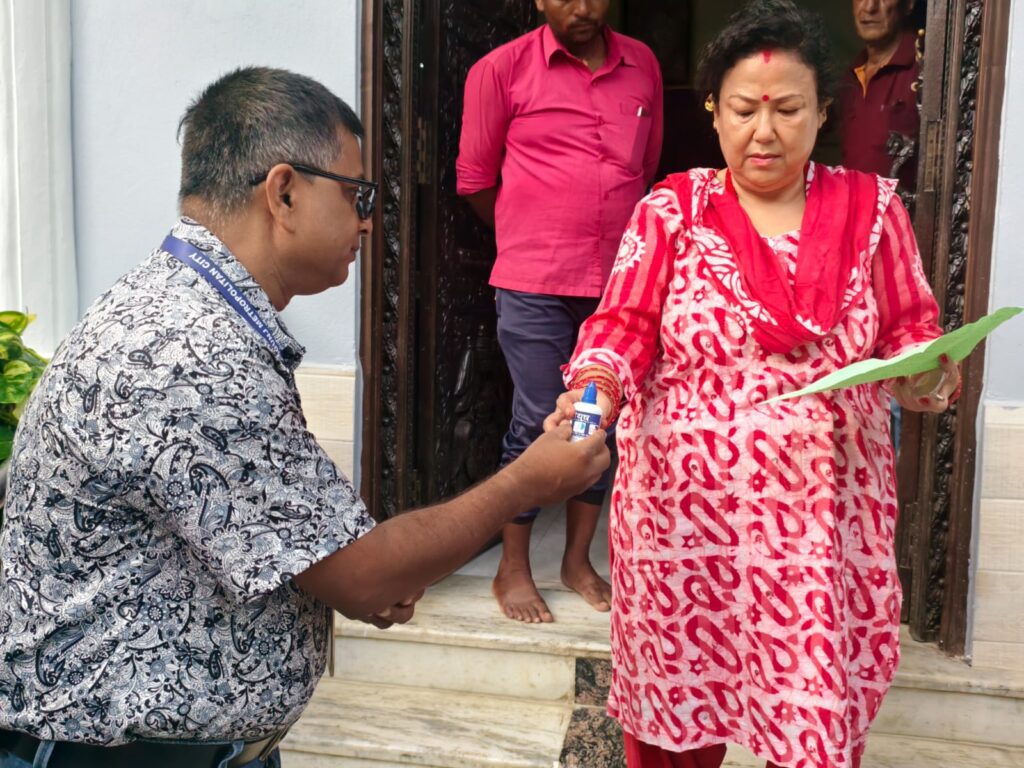
Schools in Birgunj have been closed to prevent the spread of infection. Arvindl Lal Karn, Chief Administrative Officer of Birgunj Metropolitan City, says that rapid prevention and control measures were initiated from Saturday, 7 Shrawan, immediately after cholera infection was confirmed. With free treatment available for cholera patients, Narayani Hospital has seen a surge of patients. Currently, 95 infected patients are receiving treatment at Narayani Hospital. Dr. Chuman Lal Das, Medical Superintendent, says that the hospital has mobilized staff, beds, and medical supplies, leaving no gaps in patient care.
Additional personnel have been deployed in coordination with the federal, provincial, and local governments. Doctors and nurses have been mobilized from institutions such as Madan Bhandari Health Science Academy, Birgunj Metropolitan City, and Birgunj Nursing College. Birgunj Metropolitan City and the Nepal Red Cross Society are conducting awareness campaigns door-to-door. In Madhesh Province, declared drought-affected, there is suspicion that water brought from bore wells may have been contaminated due to water scarcity.
Health Minister Pradeep Paudel has stated that, following on-site investigations, the main cause of the cholera outbreak in Birgunj may be a fault in the drinking water pipeline. However, the exact source of the cholera infection has not yet been confirmed.
The cholera outbreak in Birgunj and surrounding areas highlights how unpredictable and severe natural disasters and health risks caused by climate change can be. Abnormal rainfall, drought, and groundwater scarcity have made the situation even clearer.
Cholera is a disease known for centuries. The first recorded epidemic occurred in the 19th century, followed by six major epidemics that claimed millions of lives. The current seventh pandemic began in 1961 in South Asia and still affects the world today.
In Nepal, cholera has existed as an endemic disease since the 19th century, with outbreaks occurring almost every year in different regions. Major past outbreaks include Jajarkot in 2009, Rautahat in 2014, and more recently, Krishnanagar in Kapilvastu.
Nepal is particularly vulnerable to cholera outbreaks due to poverty, weak sanitation, and lack of infrastructure. The recent outbreak in Birgunj Metropolitan City has once again exposed this reality, raising serious public health concerns in the region.
Cholera is caused when the bacterium Vibrio cholerae enters the body through contaminated food or water, infecting the intestines. If untreated or treated late, it rapidly dehydrates the body and can lead to death.
According to the World Health Organization, each year between 1.4 and 4.3 million people worldwide are infected with cholera, and 28,000 to 142,000 die from the disease.
The drought in Madhesh Province and the cholera outbreak in Birgunj are not merely local problems; multiple studies and research indicate they are directly linked to climate change. Changes in rainfall patterns in Nepal’s Terai region, declining groundwater levels, and heatwaves have destabilized the water supply system, making it easier for diseases like cholera to spread. Alongside longstanding issues such as poverty and conflict, climate change has further aggravated the problem. Extreme seasonal events like floods, storms, and droughts reduce access to clean water and create favorable conditions for the spread of cholera bacteria. The full health impacts of climate emergencies, including cholera, are still not fully understood.

However, alongside climate change, national and international research has confirmed that this bacterial disease poses a serious threat to vulnerable communities worldwide. In various countries and communities, storms, heavy rainfall, and floods have damaged water and sanitation infrastructure, triggering cholera outbreaks.
According to UNICEF’s report “Cholera: A Global Call to Action (2023)”, in 2022, 30 countries including Zambia, Malawi, Ethiopia faced cholera outbreaks. This is 145 percent higher compared to the previous five years. UNICEF also highlights that the sixth United Nations Sustainable Development Goal of achieving “Clean Water and Sanitation for All” is seriously off track and unlikely to be met by 2030.
The World Health Organization estimates that between 2030 and 2050, climate change alone could cause an additional 250,000 deaths per year due to malnutrition, malaria, diarrhea, and heat stress. WHO also concludes that climate change increases the risk of cholera, diarrhea, and dengue, particularly for malnourished women and those without access to healthcare.
As climate emergencies increase, human displacement, droughts, and floods will also rise. These conditions increase the risk of cholera outbreaks. WHO emphasizes that unless systems are invested in to improve preparedness and resilience among at-risk populations, the burden of cholera will continue to grow. Their report “A Global Call to Action for Cholera” stresses the need for urgent and collective action.
The Epidemiology and Disease Control Division has prepared a National Preparedness and Response Plan for Acute Gastroenteritis and Cholera Outbreaks in Nepal for 2017 to 2022. It notes that certain areas of Nepal still practice open defecation, urban population density continues to rise, and inadequate access to safe drinking water, poor sanitation, and unorganized sewage systems put the population at high risk of cholera outbreaks. The Cholera Vaccination Program Operational Guidelines 2078/79 also state that contamination of drinking water and poor sanitation are key factors contributing to cholera outbreaks, emphasizing the need for prevention and control measures.
According to the study “Assessment of the Impacts of Climate-Related Factors on Diarrheal Diseases at National and Sub-National Levels in Nepal (2018),” the health impacts of climate change in Nepal are classified into six major groups. These include cardiovascular and respiratory diseases, injuries and accidents, malnutrition, diarrhea and other waterborne diseases, vector-borne diseases such as dengue and malaria, and mental health issues. All these impacts affect human health both directly and indirectly. The study also estimates that climate change can contribute to the deterioration of water, sanitation, and hygiene services, water pollution, and an increase in cholera, leptospirosis, and mosquito-borne diseases such as malaria and dengue.
Another study, “Review of Existing Disease Surveillance Systems in Nepal from the Perspective of Climate Change,” highlights that in Nepal, an increase of 1 degree Celsius in average temperature and 1 centimeter in rainfall results in a significant rise in diarrhea cases. A 1-degree Celsius temperature increase raises the average diarrhea rate by 4.39 percent, with the highest increase of 5.05 percent in hilly regions and the lowest of 0.85 percent in the Terai. Similarly, the study found that a 1-centimeter increase in rainfall leads to a 0.40 to 0.80 percent rise in diarrhea among children under five years of age.
According to the Ministry of Health and Population and WHO (2015), the health impacts of climate change are classified into three major groups: extreme weather events such as heatwaves and cold waves; diseases based on environmental and ecological systems such as dengue, malaria, and cholera; and social system-related changes such as malnutrition and mental health problems. These impacts create additional challenges for Nepal’s public health system.
These studies clearly demonstrate the strong link between climate change and health crises. The drought and cholera outbreak observed in Madhesh are two aspects of the same problem, which must be viewed in the broader context of climate change. Border areas between Nepal and India are highly vulnerable to cholera outbreaks. High population density, poor sanitation, and lack of safe drinking water increase the risk of infection. Policy gaps, the absence of cross-border health initiatives, unequal distribution of resources, and complex social, political, and geographic factors further increase the vulnerability of these communities.
In conclusion,
Climate change has become a major concern for South Asian countries such as Nepal and India. There is a lack of basic water supply and sanitation infrastructure, which has amplified social, political, economic, ecological, and environmental challenges. These issues have caused unexpected changes in rainfall patterns, increasing pressure on water sources and creating shortages of safe drinking water. As a result, the use of contaminated water increases, raising the risk of waterborne diseases such as cholera, which has serious impacts on public health.
The United Nations Sustainable Development Goal 6 for 2030 aims to ensure equitable sanitation and hygiene access, eliminate open defecation, and reduce water pollution. This goal is monitored through indicators such as sanitation, hygiene, wastewater management, water quality, efficiency of use, water scarcity, management, transboundary issues, ecosystems, and collaboration. Nepal’s performance in these areas remains weak.
Access to public sewerage systems in Nepal is limited. According to the National Census 2078, only 10 percent of households have access to sewerage systems, while 4.5 percent of households do not have toilets at all. Although around 65 percent of households have improved sanitation facilities, which is above the South Asian average of 50 percent, it remains below the global average of 68 percent (WHO-UNICEF 2017; Dorji et al. 2019). This situation facilitates the spread of diseases such as cholera and allows outbreaks to occur.
The cholera outbreak in Birgunj has highlighted the need for timely warning systems, rapid response mechanisms, and policies based on scientific evidence. In particular, it emphasizes the importance of comprehensive water resource management, taking into account the water relationship between the Chure hills and the Terai (Madhesh) region.

Nepal and India is a South Asian countries with a complex geographical structure and is highly vulnerable to natural hazards such as floods, droughts, and landslides. This makes a clear policy approach and responsive action essential during extreme weather events. Immediate improvements in safe drinking water, sanitation, and hygiene practices are urgently needed. Controlling such epidemics requires not only emergency medical treatment but also the adoption of sustainable strategies. Addressing this issue necessitates the expansion of sewage networks, upgrading infrastructure, and exploring alternative financial resources.
Nepal and India’s future wastewater management goals should not be limited to pollution control. They must also focus on water reuse, resource recovery, and water-environment restoration. This approach promotes sustainable water resource management beyond pollution reduction, helping to mitigate water scarcity, support environmental sustainability, and reinforce the principles of a circular economy. Nepal and India must continuously update, implement, and monitor these new standards and policies. Achieving this will ensure sustainable water resource management and enhance resilience against climate change.
Coordinated and collaborative disease surveillance and epidemic preparedness between Nepal and India are essential for addressing climate crises, drought, and cholera prevention. Water management in both countries is not only a public health issue but also a long-term environmental sustainability challenge. Developing early warning systems based on climate data can improve disaster response and epidemic control. For this, coordinated disease surveillance systems, preparedness mechanisms, and strategies informed by climate indicators between Nepal and India are crucial. Such collaboration will help both countries address shared challenges related to climate crises, drought, and epidemics.













Discussion about this post