


















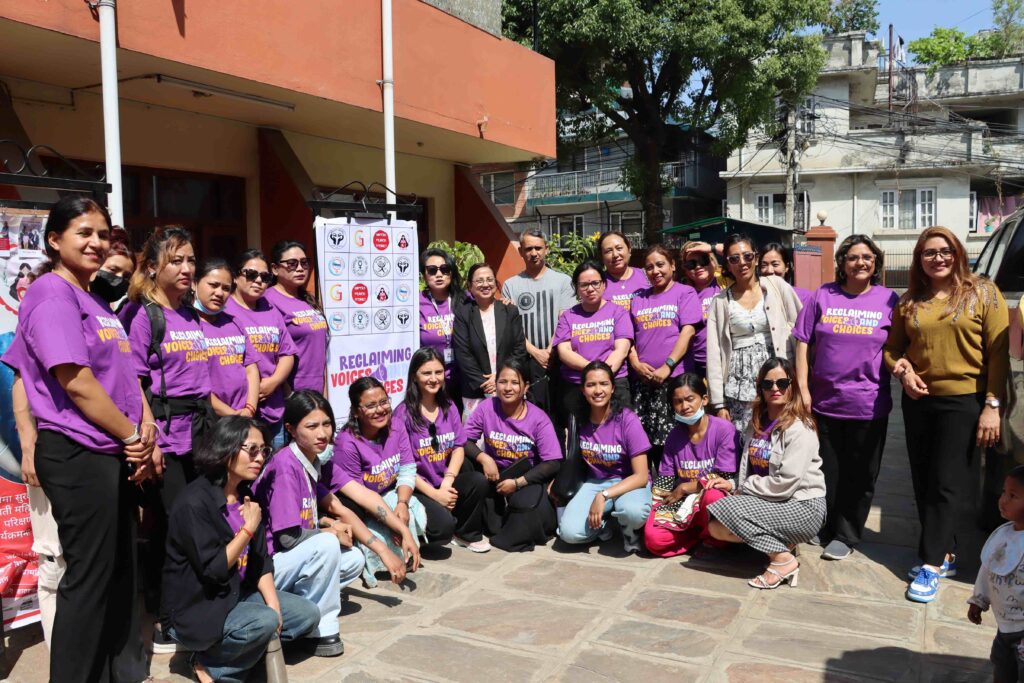
Kathmandu: A serious and meaningful dialogue focusing on key issues such as the human rights of women who use drugs, equal access to justice, social inclusion, safe motherhood, women’s health, menstrual hygiene, and dignified menstruation was held at the conference hall of Wildlife Conservation Nepal in Baluwatar.
The event was organized under the theme “Reclaiming Voices and Choices” and jointly hosted by Dristi Nepal, Gyanbodh, Aama Surakshya Nepal, and Untold Period Stories, in collaboration with Ojashwi Nepal, Swasa Nepal, and the Women Human Rights Defenders District Network, Kathmandu.
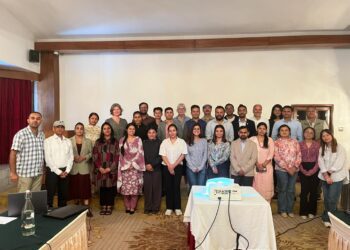
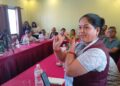
Around 60 participants—including representatives from human rights organizations, medical professionals, activists, and groups working for women’s rights—attended the event.
The program featured two panel discussions and five interactive stalls with comedy, games, and various engaging activities.
Opening Session: In-depth Dialogue on Women’s Autonomy and Safe Motherhood
The opening session of the event featured a deep and insightful discussion on women’s autonomy, decision-making capacity, access to healthcare services, and the prevailing gender-based discrimination in society. The session centered around critical issues such as equal rights, inclusive healthcare services, and the assurance of safe motherhood, fostering meaningful interaction and exchange of perspectives.
The first panel discussion, coordinated by Aama Surakshya Nepal, focused on maternal health, women’s health rights, and the need for a dignified life. Speakers emphasized that safe motherhood should not be viewed solely as a woman’s concern, but as a shared responsibility of society as a whole.

Key speakers of the session—Dr. Gauri Pradhan, Dr. Purushottam Adhikari, Dr. Neha Nayak, and Dr. Manu Karki—shared their insights and experiences on the challenges of maternal health, the need for policy reform, and the role of public awareness.
They stressed the importance of ensuring easy access to health services for all citizens, implementing strategies to reduce maternal mortality, expanding access to information in rural and marginalized communities, and taking proactive steps to strengthen institutional collaboration.
Second Session: Advocacy and Discussion on the Rights and Inclusion of Women Who Use Drugs and Women Living with HIV
The second session, led by Dristi Nepal, focused on the importance of creating safe spaces within the feminist movement for women who use drugs, women living with HIV, and those with other intersecting identities. The session centered around the theme “𝐑𝐞𝐜𝐥𝐚𝐢𝐦𝐢𝐧𝐠 𝐯𝐨𝐢𝐜𝐞𝐬 𝐚𝐧𝐝 𝐜𝐡𝐨𝐢𝐜𝐞𝐬” 𝐨𝐧 “𝐓𝐡𝐞 𝐢𝐦𝐩𝐨𝐫𝐭𝐚𝐧𝐜𝐞 𝐨𝐟 𝐜𝐫𝐞𝐚𝐭𝐢𝐧𝐠 𝐬𝐚𝐟𝐞 𝐬𝐩𝐚𝐜𝐞𝐬 𝐰𝐢𝐭𝐡𝐢𝐧 𝐟𝐞𝐦𝐢𝐧𝐢𝐬𝐭 𝐦𝐨𝐯𝐞𝐦𝐞𝐧𝐭 𝐟𝐨𝐫 𝐰𝐨𝐦𝐞𝐧 𝐰𝐡𝐨 𝐮𝐬𝐞 𝐝𝐫𝐮𝐠𝐬, 𝐰𝐨𝐦𝐞𝐧 𝐥𝐢𝐯𝐢𝐧𝐠 𝐰𝐢𝐭𝐡 𝐇𝐈𝐕, 𝐚𝐧𝐝 𝐨𝐭𝐡𝐞𝐫 𝐢𝐧𝐭𝐞𝐫𝐬𝐞𝐜𝐭𝐢𝐨𝐧𝐚𝐥 𝐠𝐫𝐨𝐮𝐩𝐬 𝐨𝐟 𝐰𝐨𝐦𝐞𝐧.,” aiming to ensure the rights of these marginalized groups within the mainstream feminist movement.
The session emphasized the need for inclusion and the establishment of just spaces for all women in the feminist movement, broadening the scope of discussions to prioritize their rights. It also sought to amplify the voices of women who have long been silenced and restore their decision-making power.
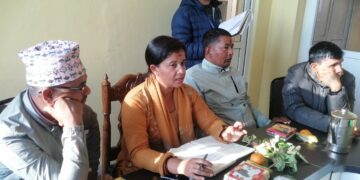
The panel included Gita Kumari Dahal, Head of the Gender Equality and Social Inclusion Branch of the National Human Rights Commission, Geeta Thapa, Chairperson of the Women’s Human Rights Defender District Network, Kathmandu and Sona Surkheti and Sharmila Khadka representing Dristi Nepal. The session was facilitated by Renuka Surya, Executive Director of Swasa Nepal and a Women’s Human Rights Defender.

At the beginning of the program, Sarita Gurung, a member of Dristi Nepal, highlighted the importance of ensuring human rights for women who use drugs, equal access to justice, and social inclusion. She introduced Dristi Nepal, which was established in 2006 with the aim of building a society free from stigma, violence, and discrimination, and has been advocating from the community level to policy level.
Gita Kumari Dahal, Head of the Gender Equality and Social Inclusion (GESI) Branch at the National Human Rights Commission, stated that the Commission is always committed to ensuring human rights for women who use drugs, equal access to justice, and social inclusion. She also mentioned that the Commission recommends the government to address issues related to policy reforms.
Presenting statistics, she shared that out of 130,424 drug users across the seven provinces of Nepal, 8,732 are women. Dahal emphasized, “As a constitutional body, the Commission conducts research, monitoring, and makes recommendations on government activities. It is essential to address the issue of drug-using women through the lens of GESI.”
She also pointed out that the available data on women is very limited and that the actual number is likely to be higher. She stressed the need for organizations like Dristi Nepal to conduct surveys to obtain accurate data on this issue.

In response to the facilitator’s question about why the issues of women who use drugs and women living with HIV are overlooked in the mainstream women’s movement, Geeta Thapa, President of the Women Human Rights Defenders District Network, Kathmandu, provided a clear perspective on the state of the feminist movement in Nepal. She stated, “There is no mainstream feminist movement in Nepal. This movement is fragmented and affected by capitalist structures, leading to the influence of only a few groups with limited access and power.”
President Thapa described the failure to raise voices against human rights violations, injustices, atrocities, and exploitation, as well as the denial of justice for victims of violence, as a symbol of the weakness in the mainstream feminist movement.
Acknowledging that issues related to women who use drugs, women living with HIV, and other such communities have not yet been established within the core of the women’s movement, she said, “However, grassroots women human rights defenders have consistently and powerfully raised these overlooked issues, which is commendable.”
She further added, “While we continue to advocate for the rights of all women, we are also giving equal importance to the pain and issues of women who use drugs and women living with HIV. We are raising a clear voice against the violence and discrimination they face.”

Similarly, Sona Surkheti, a member of Dristi Nepal, stated that the main demand of women who use drugs is “decriminalization.” She emphasized the need for efforts to end the discrimination and violence faced by this community and to protect their human rights by recommending actions to the government and other concerned bodies. Sona Surkheti also requested the panel to urge the National Human Rights Commission to take the initiative in this matter.
Furthermore, Smrila Khadka, a member of Dristi Nepal who has been advocating for the issues of women living with HIV for a long time, shared that women who use drugs are often viewed negatively by society and are stigmatized, which prevents them from coming forward openly. She added, “This is why they are deprived of access to health services and other government services.”

At the conclusion of the session, Parina Subba Limbu, the founder president of Dristi Nepal, addressed the goal of the 16th Five-Year Periodic Plan, which is “Good Governance, Social Justice, and Prosperity,” and stated, “Unless women, who make up half of the country’s population, have easy access to all state services, facilities, and social inclusion, the development goals of the country cannot be achieved.”
Founder President Limbu further added, “The Nepalese government has also pledged to achieve the Sustainable Development Goals by 2030. If the 6.7% of women who use drugs are ignored and discriminated against, how can the commitments and plans taken by the Nepalese government be fulfilled? This is a matter for reflection.”
She emphasized that it is the responsibility of national movements, such as the National Human Rights Commission, the National Network of Women Human Rights Defenders, and District Networks, to include these marginalized communities in the process and ensure their human rights. She also stated that organizations like Dristi Nepal, which advocate for these issues, have a duty to work further for the decriminalization of these communities.

🌱 Feminism Meets Climate Justice
A compelling presentation by Subigya Paudel, co-founder of Harin Nepal, explored the deep interconnection between climate change and feminism. She urged participants to adopt a gender-inclusive perspective in climate policies and emphasized that women are not only victims of climate crises but central to the solutions.
“Feminism isn’t just about gender equality—it’s also a fight for environmental justice,” she remarked.
🛍️ Women-led Enterprises Shine
A vibrant part of the event was the display of women-led small businesses such as Hatti Hatti Nepal, Agra Industries, Manai Dekhi Candles, Eco Sathi Nepal, Thrift by Dristi Nepal, and Kehi Crafts. These stalls showcased eco-friendly, handcrafted, and upcycled products promoting local entrepreneurship and women’s empowerment.


🍵 Eco-Friendly Campaign: Bring Your Own Mug
A unique environmental initiative titled ‘Bring Your Own Mug’—led by Eco Sathi Nepal—encouraged attendees to bring their own mugs to avoid single-use cups. Chiya Munch served tea in participants’ mugs, reinforcing sustainable event practices.

“Such small actions can create long-term cultural shifts,” said Dr. Manu Karki of Eco Sathi Nepal.
🎵 Cultural Connection
A musical performance by Yojana Thapa Magar added vibrant energy to the event, creating a celebratory yet reflective atmosphere for all attendees.

🗣️ Participant Reflections
Participants expressed their happiness, describing the campaign as enjoyable, easy, and effective. The participatory discussions, inspiring statements, and open interactions made the event engaging, and attendees emphasized the need for such programs to continue regularly.
The program started at 10:00 AM and concluded at 3:00 PM.


#ReclaimingVoicesAndChoices #DrugUserRights #SafeMotherhood #MenstrualHealth #WomensRightsNepal #GenderEquality #ClimateJustice #FeminismNepal #IntersectionalFeminism #HealthForAll #BringYourOwnMug #DignityAndHealth #SRHRNepal #NepalFeministMovement #EcoFriendlyNepal #WomenLedBusinesses #InclusiveLeadership #BreakTheSilenceNepal #WomensVoicesMatter #SocialInclusion #BreakingBarriers










Discussion about this post