



















A Decade After Gorkha: Nepal Geotechnical Society Calls for Preparedness, Not Complacency
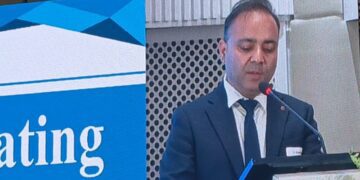
Keynote Message by Dr. Mandip Subedi, President of NGS:
- Urged not to forget the devastating lessons of the 2015 Gorkha Earthquake.
- Shared geotechnical images showing structural failures due to liquefaction, poor soil design, and weak engineering integrity.
- Highlighted the contrast between engineered vs non-engineered buildings—non-engineered structures suffered the most damage.
- Emphasized the “Build Back Better” approach in post-earthquake reconstruction.

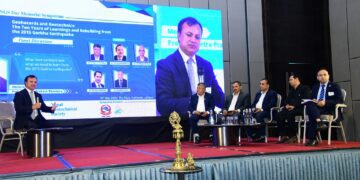
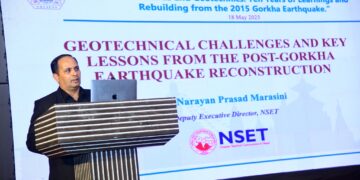
Kathmandu, Baisakh 5 – The Nepal Geotechnical Society (NGS) celebrated its 31st anniversary with a symposium themed “Geo-Risks and Geotechnical Engineering: A Decade of Learning and Reconstruction since the 2015 Gorkha Earthquake.” Held at The Plaza in Pulchowk, the event witnessed the presence of engineers, geoscientists, urban planners, researchers, policy-makers, and representatives from various professional institutions.
In his opening remarks, NGS President Dr. Mandip Subedi emphasized the importance of not forgetting the harsh lessons of the 2015 Gorkha Earthquake. Presenting photographs from the time, he analyzed the damage from a geotechnical perspective, highlighting issues such as soil liquefaction, improper structural design, and the stark differences between engineered and non-engineered buildings.
“Our traditional and well-engineered structures mostly withstood the impact, but non-engineered and haphazard constructions faced massive destruction,” he said. He reminded attendees that Nepal has since moved toward safer and stronger infrastructure through the “Build Back Better” approach.
“We Learned, But Failed to Implement”
Dr. Subedi referred to the recent 5.7 magnitude Jajarkot Earthquake as a painful reminder of repeated mistakes. “Landslides, collapsed buildings and bridges—history repeated itself. We learned the lessons from Gorkha, but failed in implementation,” he stated.
According to Dr. Subedi, the Jajarkot earthquake exposed a deep disconnect between policy formulation and execution. “We make plans but fail to act on them. Unplanned settlements in high-risk areas remain unchanged,” he added. Acknowledging NGS’s own responsibilities, he said, “We have organized workshops, training sessions, and collaborated with international experts, but discussions alone are not enough. Without action, there will be no change.”

Announcement of “GeoMandu 2026”
He noted that five years after the Gorkha Earthquake, NGS launched the “GeoMandu” initiative as an example of sustained efforts but stressed the need for action-oriented transformation. “We keep talking but forget to act. That’s why Jajarkot happened again,” he expressed with concern.
Dr. Subedi concluded, “Nepal cannot afford to treat disasters as isolated incidents. The earth may shake again, but our response must be ready.”
The event also marked the announcement of the third international GeoMandu 2026 conference. The previous edition, held in 2024, saw participation from nearly 500 delegates, including 200 international representatives. Over 120 technical papers from the conference will be published in four volumes by Springer.
The symposium featured Physical Infrastructure and Transport Secretary Engineer Keshav Kumar Sharma as the chief guest, and IOE Dean Prof. Sushil Bajracharya as a special guest.
NGS General Secretary Engineer Udayaraj Neupane presented the annual report and announced a new Memorandum of Understanding (MoU) with the Society of Consulting Architectural and Engineering Firms (SCAEF), aimed at strengthening technical cooperation.

Another highlight of the event was the launch of the Geo-Disaster Report Book, edited by Prof. Bhandari, President Subedi, and Engineer Rajan KC.

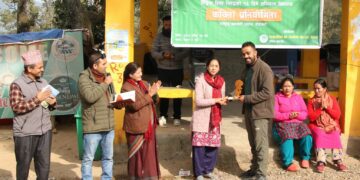
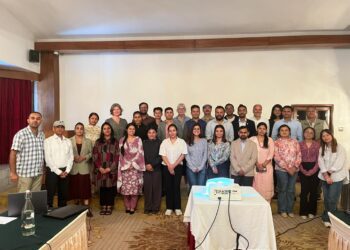
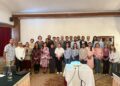
The event also included award presentations, a book launch, photo and poster exhibitions, group photographs, and a cultural program. Participants emphasized the need for synergy between science, technology, and implementation to effectively face future disasters.












Discussion about this post