RRI Celebrates 20 Years in Nepal, Honoring Global Indigenous Leaders with First-Ever Collective Action Awards
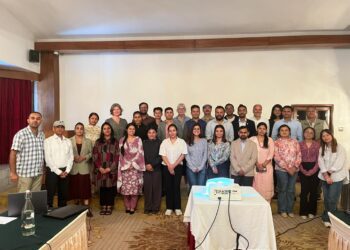
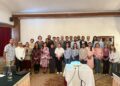
Kathmandu, June 30, 2025 — The Rights and Resources Initiative (RRI) celebrated its 20th anniversary in Kathmandu, Nepal, by recognizing three exceptional Indigenous and local communities from across the Global South with the inaugural Collective Action Awards. These awards celebrate bold leadership in protecting land, forests, and natural resources through sustainable, community-led practices.
RRI—a global coalition of over 200 organizations—has worked since 2005 to promote land and resource rights for Indigenous Peoples, Afro-descendant communities, and local populations. This landmark award ceremony was co-hosted by long-time Nepal-based partners: FECOFUN, NEFIN, Green Foundation Nepal, CIPRED, NIWF, INWOLAG, and the Women Rights and Resources Network.
The awardees were selected from nearly 200 nominations worldwide and were honored for their collective resilience, innovation, and cultural revival.
🏆 The Three Award-Winning Communities
Africa – Nashulai Maasai Conservancy, Kenya In 2016, Maasai landowners from eight villages in the Maasai Mara formed Nashulai Maasai Conservancy—one of East Africa’s first Indigenous-run conservancies. It challenged the traditional conservation model that excluded Indigenous people and instead revived Indigenous knowledge to promote coexistence between wildlife, pastoralism, and human communities. “This award shows us that when communities work together, incredible things can happen,” said Nelson Ole Reiyia, Co-Founder and CEO. The conservancy has become a hub for environmental education, women’s empowerment, and eco-tourism, generating livelihoods and restoring degraded land.
Asia – Jargaria Indigenous Community, Aru Islands, Indonesia Known for their powerful #SaveAru campaign, this community stopped a massive corporate land acquisition plan that threatened over half a million hectares of forest. Rooted in customary governance, their resistance inspired a national movement in Indonesia between 2013–2015. “The award has breathed new life into our movement,” said Rosina Gaelagoy, a local leader. “It gives us strength to continue protecting our forests and culture.”
Latin America – Jupago Kreká Indigenous Collective, Brazil The Xukuru do Ororubá people in Brazil, after regaining 27,555 hectares of ancestral land in 2002, launched the Jupago Kreká collective to restore their sacred territory using biocentric farming practices that integrate forest regeneration, traditional seeds, and community well-being. “We are very happy to receive this award. It inspires us to keep dreaming and continuing our project of life,” said Bela Xukuru, member of the collective.
🎤 Nepali Leaders Applaud Global Indigenous Solidarity
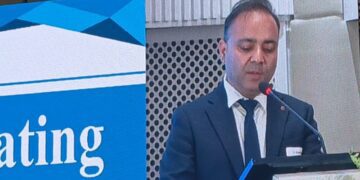
The ceremony began with remarks from Aain Bahadur Shahi Thakuri, Nepal’s Minister for Forests and Environment. He praised the collaboration between RRI and Nepal’s community forestry movement and reaffirmed the government’s support for grassroots conservation.
“Nepal’s achievements in forest restoration are closely tied to community ownership and partnerships like that with RRI,” he said.
Former Prime Minister KP Sharma Oli, in a written message, lauded the role of local communities in expanding Nepal’s forest cover from 29% in 1990 to over 46% today. He called Nepal’s community forestry model a global example of inclusive governance.
Dr. Solange Bandiaky-Badji, President and Coordinator of RRI, noted:
“These winners are living proof that ancestral knowledge, when combined with collective action, creates powerful solutions to climate and biodiversity crises.”
Peggy Smith, Chair of RRI’s Board, added:
“We hope these awards continue to shine light on invisible efforts of communities who’ve cared for the planet far longer than any modern institution.”
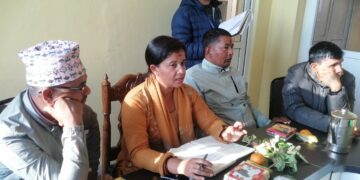
Thakur Bhandari, Chairperson, Federation of Community Forestry Users Nepal (FECOFUN) – co-host of event and RRI Partner: “Since 2007, RRI and FECOFUN have consistently collaborated to support community forestry in Nepal. Today, 51% of Nepali population benefit from community forestry, and RRI has had a big role in achieving that.”
🌏 Tsumba Community from Nepal Among Finalists
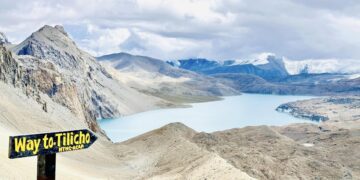
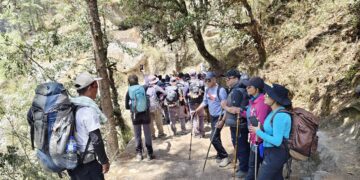
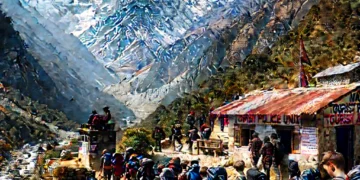
The Tsumba community of Nepal’s remote Himalayan region was selected as one of the 15 global finalists. Known for their sustainable cultural and environmental practices, they were honored for their stewardship of high-altitude ecosystems and sacred landscapes.
🔮 Looking Forward: A New RRI Tradition
This year’s Collective Action Awards marked the beginning of a long-term commitment by RRI to amplify grassroots voices globally. Future award cycles will be guided by community input and accompanied by support through RRI’s CLARIFI regranting mechanism, capacity building, and inclusion in global forums.
Raju Jhallu Prassad, who is also recognized as Rajendra Bhatta, has thrived in the field of journalism for seven fruitful years. Currently, he holds the position of Chief Editor at Tourshala, focusing his expertise on Environmental Journalism. His wide-ranging interests encompass History, Culture, Tourism, Theatre, and Literature. Beyond his journalism career, Raju is a dedicated researcher, an enthusiastic traveler, a prolific writer, and a passionate student of theater.
You can get in touch with him at raju.tourshala@gmail.com or jhalludurbar@gmail.com.























Discussion about this post